

How to Choose the Right Hair Density for Your Needs
Alongside length and color, hair density is one of the most important — and most often overlooked — factors when choosing a wig or hair extensions. Getting the density wrong can make a piece look noticeably unnatural, whether it's too thin or too thick compared to your own hair. In this article, HQ Hair breaks down what density really means and how to choose the right level for your specific needs.
Primary keywords: hair density, wig density, choosing the right density, 100% human hair, human hair wig density Secondary keywords: double drawn hair, hair end thickness, natural-looking wig, choosing the right hair extensions
Why Does Density Matter Just as Much as Length or Color?
When shopping for a wig or hair extensions, most customers focus on length and color first. But there's another technical factor that has a direct impact on how natural a piece looks and feels when worn — density, or the thickness of the hair.
A product with the perfect length and color can still end up looking unnatural if the density isn't right — too thin relative to your face, or too thick compared to your own natural hair. That's why understanding density, and knowing how to choose the right level, is a step you shouldn't skip before deciding on a wig or set of extensions.
1. What Is Density?
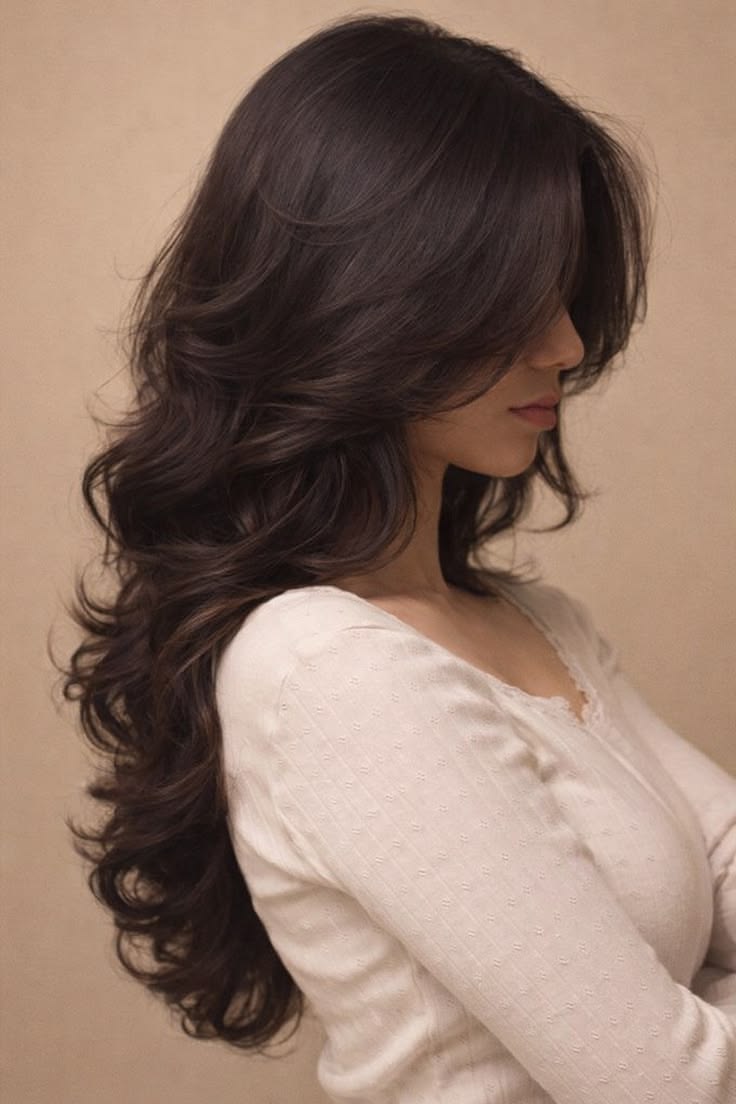
Density refers to how thick or thin the hair on a product is, determined by the number of strands per unit area of the base. The higher the density, the more strands a piece contains, giving it a fuller, more voluminous overall look.
Density is typically expressed as a percentage (e.g., 100%, 130%, 150%, 180%, and so on), with 100% generally considered roughly equivalent to the average density of natural human hair.
2. Common Density Levels and Their Characteristics
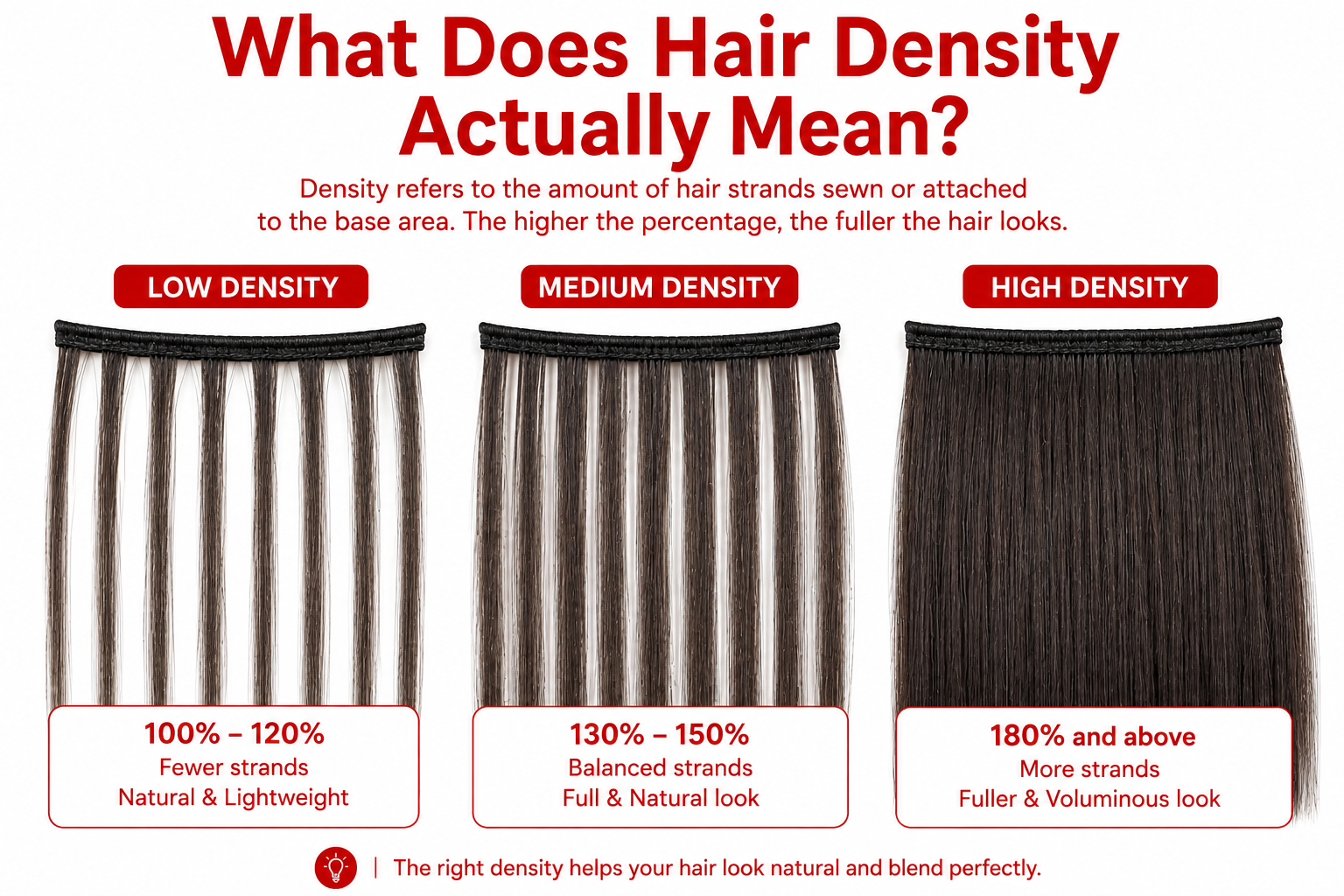
Low Density (roughly 100%–120%)
This density level creates a natural look, close to the average thickness of many people's real hair. Products at this level tend to feel light and breathable, even when worn for extended periods.
Best suited for:
Those with relatively thin natural hair who want the piece to blend seamlessly with what they already have
Anyone who prioritizes a light, breathable feel over long wear times
Everyday use, where maximum comfort matters most
Medium Density (roughly 130%–150%)
This is the density level most customers choose, as it strikes a balance between a natural look and a fuller appearance. It's full enough to look lively without tipping over into looking unnatural.
Best suited for:
A wide range of uses, from everyday wear to special occasions
Those who want their hair to look fuller than their natural hair while still keeping a natural appearance
A safe choice for first-time wig or extension wearers who aren't yet familiar with higher density levels
High Density (roughly 180% and above)
This is the density level that delivers the most noticeably full, voluminous look. That said, if it isn't matched thoughtfully to your face shape and natural hair, high density can sometimes end up looking less natural overall.
Best suited for:
Those wanting a distinctly full, voluminous effect, especially for special occasions like parties or events
Those with larger face shapes, where a proportionally fuller look helps balance overall proportions
Complex styling needs that require extra hair to work with, such as high buns or multi-layered braids
3. Factors to Consider When Choosing Density
Your Existing Natural Hair Texture
If you have relatively thin natural hair and want a piece — extensions, in particular — to blend in seamlessly, it's best to lean toward low-to-medium density to avoid a noticeable contrast between the extensions and your natural hair.
Face Shape
Rounder or larger face shapes tend to look more balanced with higher density, while smaller, more delicate face shapes often suit medium density better, avoiding a "heavy" look overall.
Intended Use
For everyday wear at work or in daily life, low-to-medium density is usually the better choice for comfort and breathability. For special occasions like parties, photoshoots, or events, higher density can be worth considering for a more striking effect.
Desired Hairstyle
Certain styles — high buns, intricate braids, or looks that require significant volume — generally call for higher density, simply because they need more hair to work with.
4. Density vs. Double Drawn: Two Commonly Confused Terms
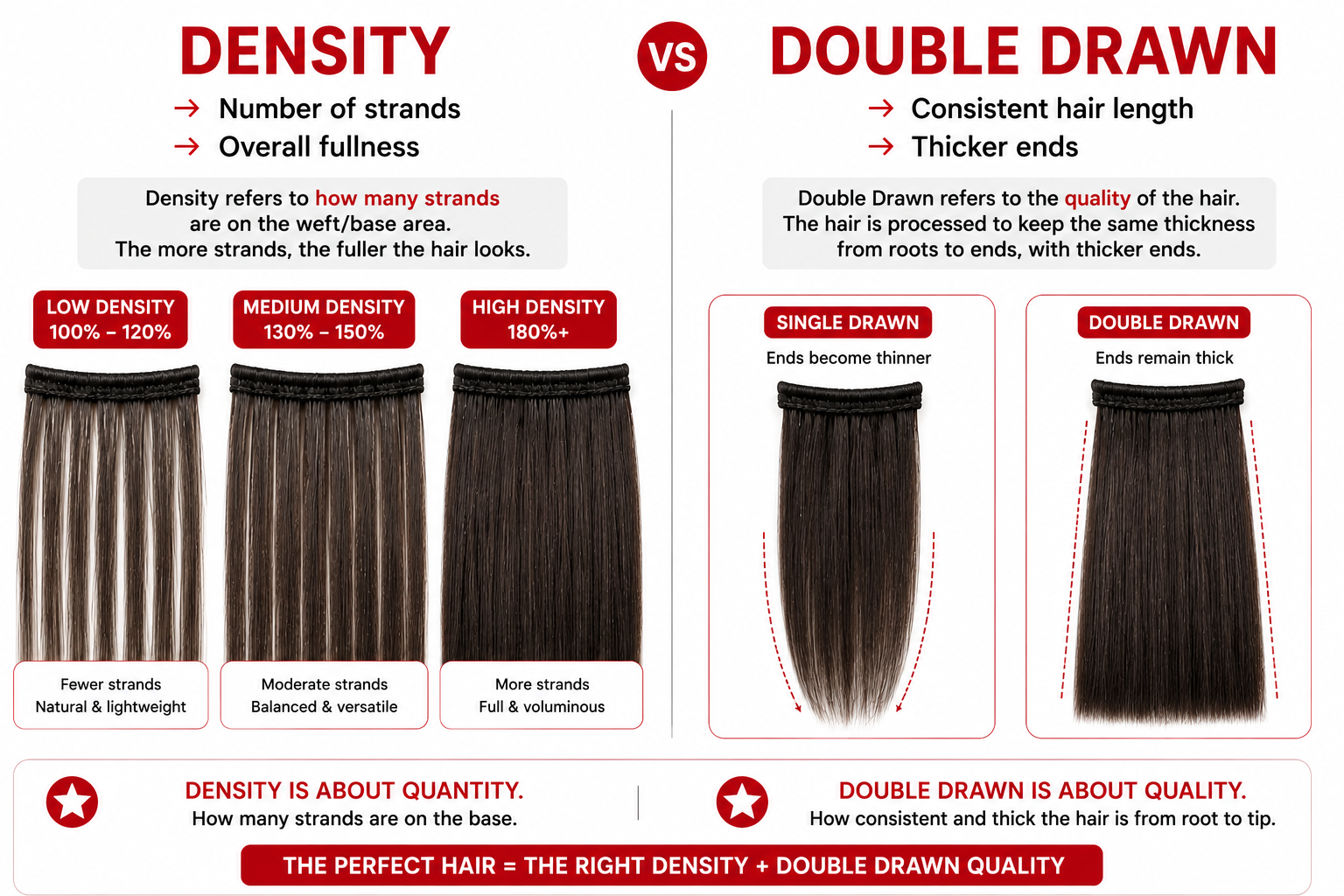
Many customers mix up density and double drawn, even though they refer to two different things:
Density relates to the overall thickness of a piece — the number of strands per unit of base area
Double drawn relates to how consistent the thickness is from root to tip — double drawn hair keeps roughly the same thickness at the ends as at the roots, while regular (single drawn) hair tends to thin out gradually toward the ends
A piece can have medium density but still be double drawn (thick ends), or high density but be single drawn (ends thinner than the roots). Understanding this distinction helps you make a more precise choice, especially if having full, thick-looking ends is a priority for you.
5. Quick Guide: Which Density Should You Choose?
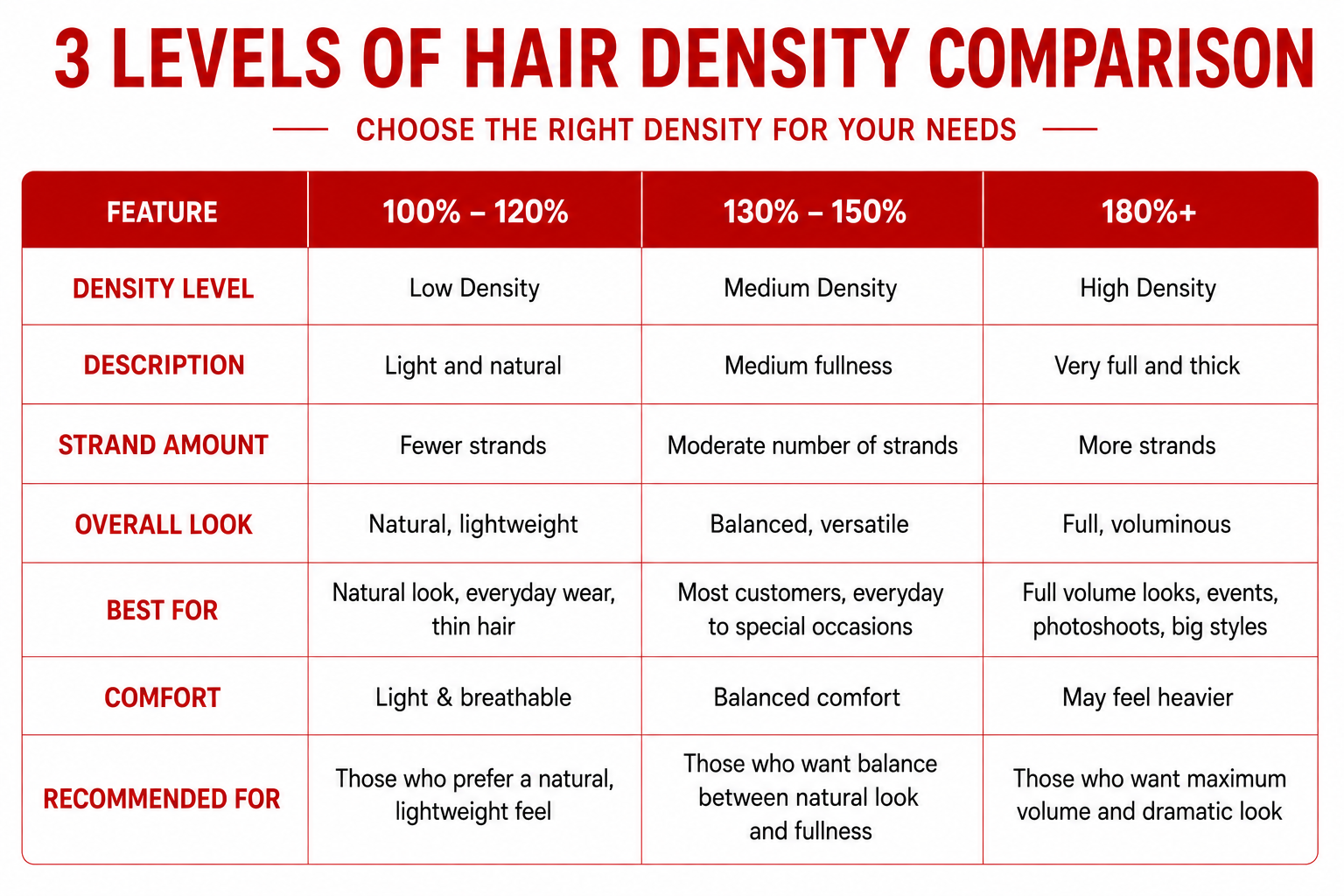
If you have thin natural hair and want extensions that blend in seamlessly: → Go with low-to-medium density (100%–130%)
If you want a balanced, versatile option: → Go with medium density (130%–150%)
If you want a distinctly full, voluminous look for a special occasion: → Go with high density (180% and above)
If you have a larger face shape or need to create a complex style: → Go with medium-to-high density, depending on your specific needs
6. Frequently Asked Questions
Is higher density always better than lower density? Not necessarily. The right density depends on your intended use, face shape, and natural hair texture — higher isn't automatically better. Choosing a density that's too high for your actual needs can sometimes make the overall look less natural.
Can I request a custom density? For Made to Order pieces, customers can typically request a specific density based on their preferences. For Ready to Ship pieces, density is usually fixed at one of the common, pre-set levels available.
What should I do if I'm not sure which density to choose? It's best to share details about your natural hair texture, face shape, and primary intended use so you can get guidance on the most suitable density, rather than choosing at random.
7. Conclusion
Density is a key technical factor that directly affects how natural a wig or hair extension looks and feels. Choosing the right level — based on your natural hair texture, face shape, intended use, and desired style — helps ensure you end up with a piece that looks natural while genuinely meeting your needs.
If you're still unsure which density is right for you, the HQ Hair team is always here to offer detailed guidance.
👉 Reach out to HQ Hair today for personalized advice on choosing the right density for your needs.
+84 389 023 690